


Frank Zappa


Frank Zappa

Frank Zappa

Frank Zappa

Frank Zappa
Frank Zappa

Frank Zappa
Album, Mothers and performance references
Frank Zappa graphics can represent several connected identities: composer and guitarist, leader of the Mothers of Invention, live performer and musical satirist. That breadth gives album shirts, concert-inspired designs and song references distinct meanings rather than making them interchangeable variations on a standard artist portrait.
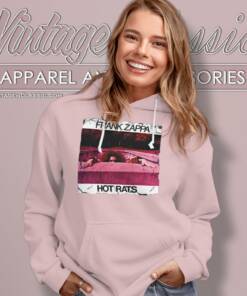
Album-centered designs provide the most direct connection to a particular part of the catalog. References to Roxy & Elsewhere, Funky Nothingness, Apostrophe ('), Chunga’s Revenge and Absolutely Free can pair release titles with portraits, expressive lettering or artwork arranged like an album cover. Mothers of Invention graphics place the band identity more prominently, while Halloween 1977 and 1984 tour references shift the emphasis toward Zappa as a live performer.
Portraiture, typography and absurdist humor
Some Frank Zappa graphic tees use high-contrast photography, a compact nameplate or a signature-style mark to keep attention on the artist. Black garments are common in the visual sample, sometimes interrupted by red, orange, yellow or purple accents. Other designs favor surreal illustration, cartoon treatments or deliberately unconventional lettering, a better fit for references built around Zappa’s comic and absurdist side.
Song- and phrase-led graphics offer a different kind of recognition. “Montana,” “Valley Girl” and “Titties ’n Beer” work primarily through words familiar to listeners, so typography may matter more than portrait detail. These designs can feel more playful or cryptic than graphics organized around a recognizable album title.
Choosing between design directions
For a restrained treatment, consider a monochrome portrait, signature graphic or compact Mothers of Invention reference. Album and performance designs make a particular recording or live period the focal point, while illustrated and song-title graphics foreground Zappa’s humor. Vintage-style treatments should be understood as period-inspired graphic choices unless an individual product description verifies that a garment is genuinely from an earlier era.